19h30 • Cherche Forêt • Nathalie Spaulding • Vidéo / lecture • FR / Strasbourg
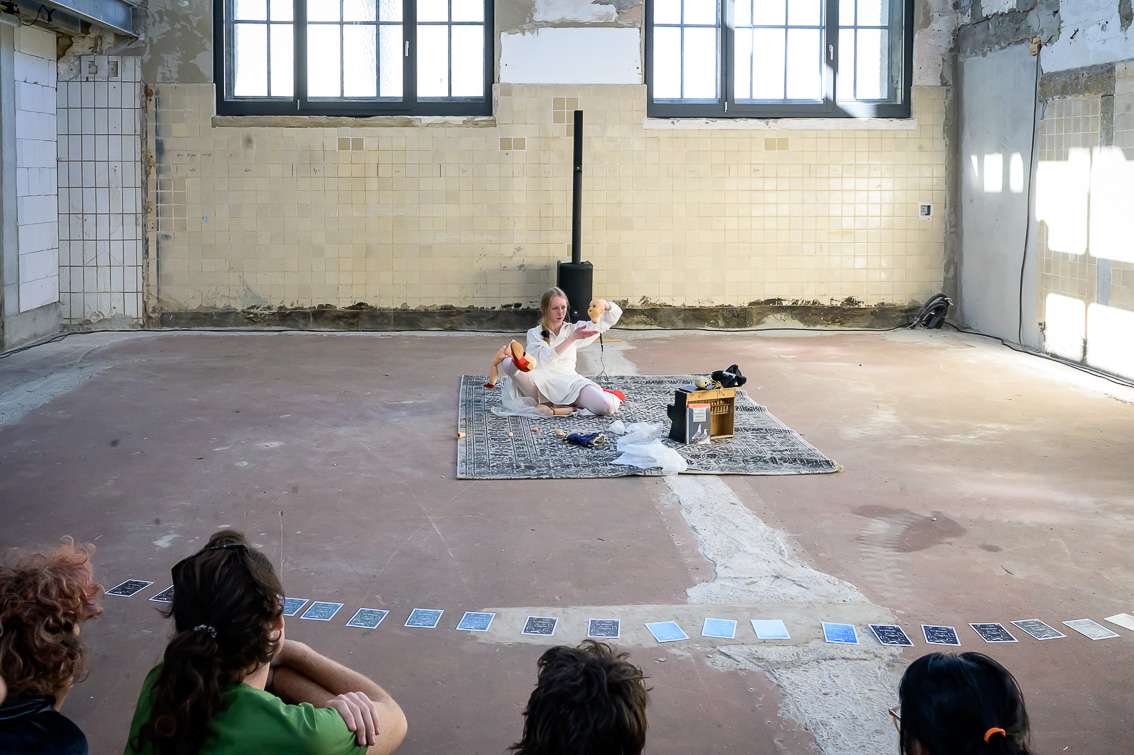
Dans cette performance, Nathalie Spaulding tisse en direct des fragments de récits, d’images et de souvenirs pour interroger notre façon d’habiter
la nature. Entre les forêts du nord de la Thaïlande, où a grandi sa mère, et les paysages qu’elle traverse aujourd’hui en Alsace, se construit un
dialogue entre deux territoires en transformation. La forêt devient un personnage fuyant, toujours à retrouver. À partir de vidéos de randonnées, de récits improvisés et d’échos documentaires, elle explore un présent fragile qui révèle des futurs possibles — un kairos, un moment juste où l’on peut encore agir.
In this performance, Nathalie Spaulding weaves together fragments of stories, images, and memories in real time to examine the way we inhabit
nature. Between the forests of northern Thailand, where her mother grew up, and the landscapes she traverses today in Alsace, a
dialogue unfolds between two territories in flux. The forest becomes an elusive character, always to be rediscovered. Drawing on hiking videos, improvised narratives, and documentary echoes, she explores a fragile present that reveals possible futures—a kairos, a precise moment when we can still act.
la nature. Entre les forêts du nord de la Thaïlande, où a grandi sa mère, et les paysages qu’elle traverse aujourd’hui en Alsace, se construit un
dialogue entre deux territoires en transformation. La forêt devient un personnage fuyant, toujours à retrouver. À partir de vidéos de randonnées, de récits improvisés et d’échos documentaires, elle explore un présent fragile qui révèle des futurs possibles — un kairos, un moment juste où l’on peut encore agir.
In this performance, Nathalie Spaulding weaves together fragments of stories, images, and memories in real time to examine the way we inhabit
nature. Between the forests of northern Thailand, where her mother grew up, and the landscapes she traverses today in Alsace, a
dialogue unfolds between two territories in flux. The forest becomes an elusive character, always to be rediscovered. Drawing on hiking videos, improvised narratives, and documentary echoes, she explores a fragile present that reveals possible futures—a kairos, a precise moment when we can still act.
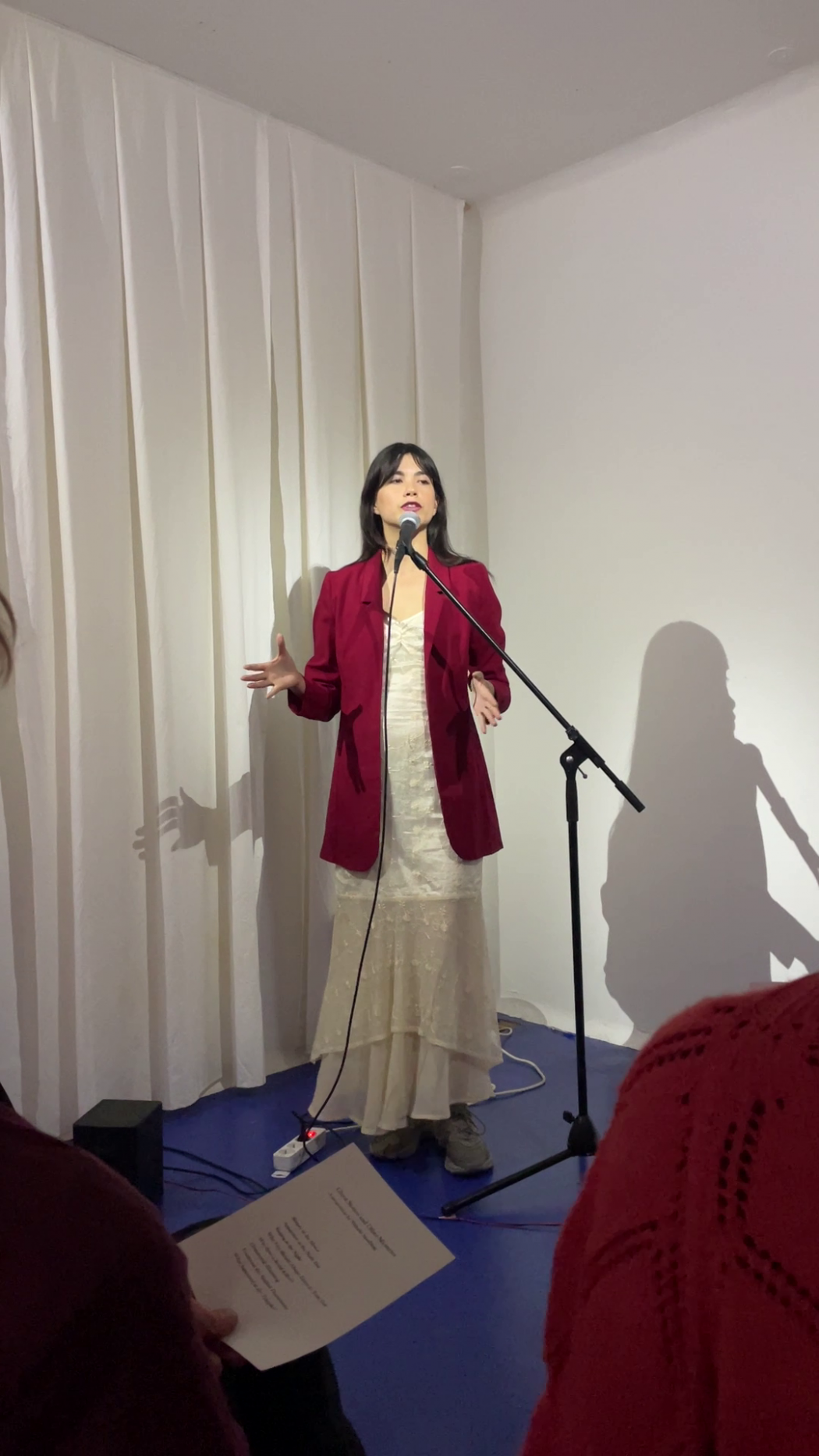
Nathalie Spaulding is a performance artist, video artist, storyteller, and tarot reader based in Strasbourg, who graduated from HEAR in 2021. Drawing on a multicultural oral tradition (Thai, French, and American), she weaves non-linear narratives from filmed fragments, personal archives, and live improvisations. Her work oscillates between humor, poetry, and ambiguity, allowing streams of consciousness to shine through. She also explores tarot as a performative, intuitive form and creates handmade micro-editions. Through these multifaceted practices, she invents a fluid language where stories, memories, and thoughts are reimagined.
20h15 • Waving through life • Adam Dawoud • Danse / Vidéo • Palestine / Amsterdam
« Weaving Through Life » est un spectacle de danse poétique qui retrace les fils de l'existence — ces moments de perte, d'amour et de transformation qui façonnent ce que nous sommes. À travers le mouvement, la voix et la présence, Adam Dawoud invite le public à entrer dans un espace où la mémoire personnelle rencontre l'histoire collective. Le spectacle explore la manière dont le corps transmet des histoires au-delà des frontières et des générations, tissant douleur et espoir en gestes de résilience et de libération.
Weaving Through Life is a poetic dance performance that traces the threads of existence — the moments of loss, love, and transformation that shape who we
are. Through movement, voice, and presence, Adam Dawoud invites the audience into a space where personal memory meets collective history. The performance explores how the body carries stories across borders and generations, weaving pain and hope into gestures of resilience and liberation.
Weaving Through Life is a poetic dance performance that traces the threads of existence — the moments of loss, love, and transformation that shape who we
are. Through movement, voice, and presence, Adam Dawoud invites the audience into a space where personal memory meets collective history. The performance explores how the body carries stories across borders and generations, weaving pain and hope into gestures of resilience and liberation.

Adam Dawoud is a Palestinian dancer, choreographer, and experimental artist. Born in Gaza, he turned dance into an act of survival and freedom amid war. Through over 700 performances, he forged a raw, poetic, and spiritual movement language. Now based in Amsterdam, he explores the borders between art, memory, and healing. His work reflects exile, resistance, and the body’s transformation through oppression. His solo One Day I Will See the Light embodies this journey — from darkness to light, from chaos to rebirth.
21h00 • Le Paradoxe d'Otto Mobil • Arthur Ménard-Salis • Seul en scène / Art-visuel • FR / Paris
Voilà un moment qu’Otto Mobil a quitté son parking souterrain lors d'un Coming Autoroute fracassant. Maintenant qu’il a fait le tour d’une surface terrestre dont il a savouré la lumière, il se trouve confronté à une crise existentielle profonde. Créé de la main humaine, il est pourtant désavoué par l’ensemble de ses créateurs, en quête de nouveaux territoires à l’aide de véhicules volants. Otto Mobil partage alors ses réflexions, pour, malgré le paradoxe de son existence, limiter le drame écologique auquel l’humanité a abandonné ses anciens moyens de transport.
It has been a while since Otto Mobil left its underground parking garage during a spectacular « Coming Autoroute » event. Now that it has traveled across the Earth’s surface, basking in its light, it finds itself facing a profound existential crisis. Created by human hands, it has nonetheless been disowned by all of its creators, who are now seeking new territories using flying vehicles. Otto Mobil thus shares his reflections in order to, despite the paradox of his existence, mitigate the ecological crisis that has led humanity to abandon its former modes of transportation.
It has been a while since Otto Mobil left its underground parking garage during a spectacular « Coming Autoroute » event. Now that it has traveled across the Earth’s surface, basking in its light, it finds itself facing a profound existential crisis. Created by human hands, it has nonetheless been disowned by all of its creators, who are now seeking new territories using flying vehicles. Otto Mobil thus shares his reflections in order to, despite the paradox of his existence, mitigate the ecological crisis that has led humanity to abandon its former modes of transportation.
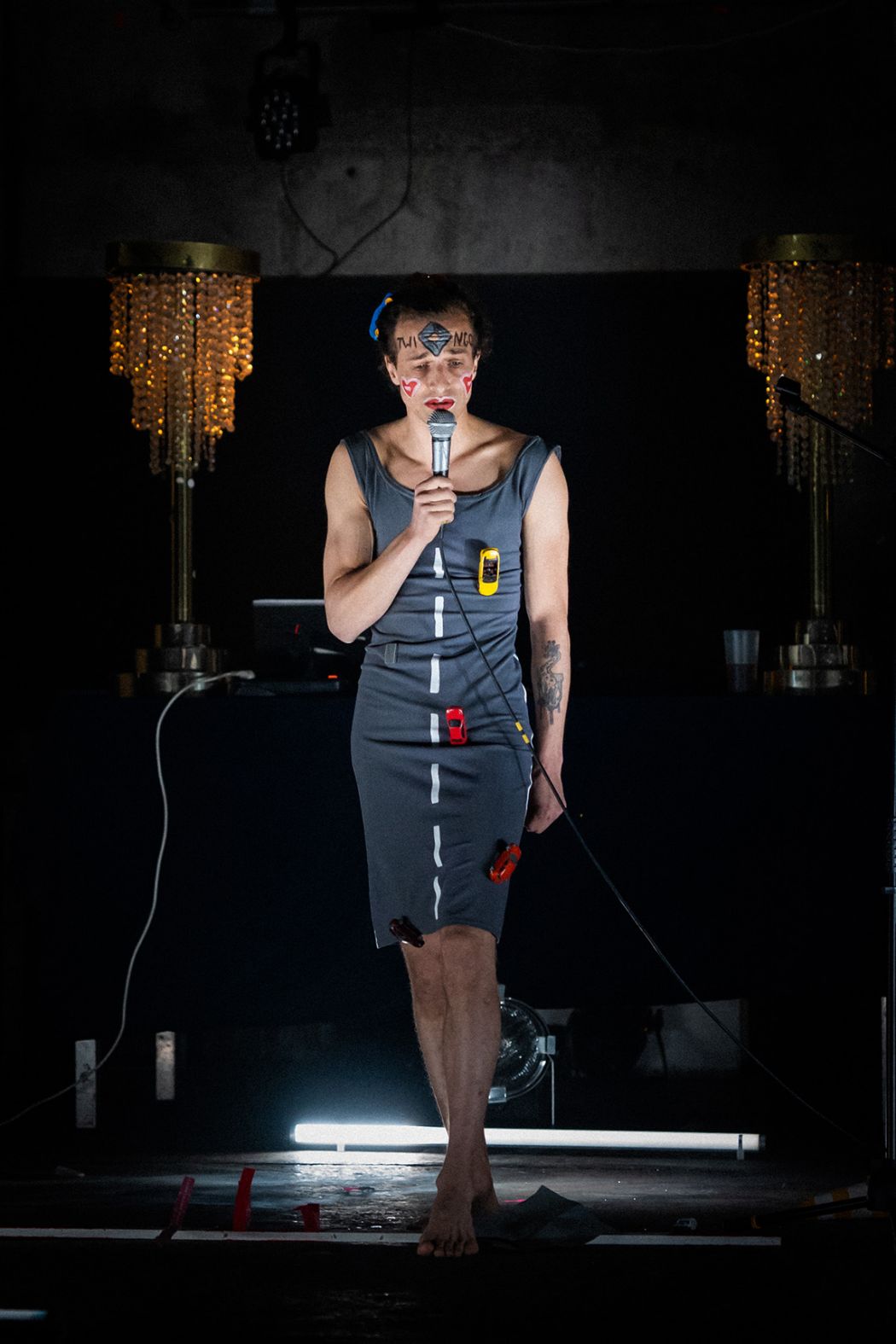
Arthur Ménard-Salis was born in 1995 in Rueil-Malmaison. A graduate of the Haute École des Arts du Rhin in Strasbourg, where he discovered sound poetry, drag, and print media, he rounded out his training with studies at a theater school and ongoing practice in dance and then singing. Navigating between cabaret, exhibition spaces, and literary creation, each of his works is conceived as a living element of an expansive universe. Exploring the mechanisms of comedy, performance and textiles serve as tools to re-examine reality, ideally through participatory forms.
21h45 • White Gold Rubber Fever • Tree Samsara • Vidéo / Performance • USA, DE / Berlin
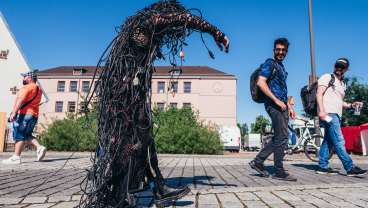
« White Gold, Rubber Fever » explore le caoutchouc et le latex à la fois comme matériaux et comme métaphores. Les arbres exsudent du latex en réaction à la violence qui leur est infligée, pour finir transformés en produits en caoutchouc qui perpétuent leur emprisonnement, devenant ainsi un symbole du désir mondialisé et de la dévastation écologique. La cérémonie des « fantômes affamés » est réinventée pour libérer les esprits prisonniers d’un désir colonial qui nie tout avenir de solidarité et de réconciliation. Le caoutchouc agit comme une force fugitive : capable de se plier, de s’étirer et de se soustraire au désir colonial. Le caoutchouc devient rébellion, possession, reprise de possession, mémoire et mythe. Qui détient la soif de caoutchouc et détermine si nos fantômes cherchent la libération ou la reproduction ?
White Gold, Rubber Fever traces rubber and latex as both material and metaphor. The trees bleed latex in response to harm, only to be made into rubber products that continue imprisonment, becoming a symbol of globalised desire and ecological devastation. The « hungry ghost » ceremony is reimagined to liberate spirits bound by colonial longing, which deny futures of solidarity and reconciliation. Rubber acts as a fugitive force : capable of bending, stretching, and slipping free of colonial desire. Rubber becomes rebellion, possession, repossession, memory and myth. Who holds the hunger of rubber and determines whether our ghosts seek liberation or reproduction ?
White Gold, Rubber Fever traces rubber and latex as both material and metaphor. The trees bleed latex in response to harm, only to be made into rubber products that continue imprisonment, becoming a symbol of globalised desire and ecological devastation. The « hungry ghost » ceremony is reimagined to liberate spirits bound by colonial longing, which deny futures of solidarity and reconciliation. Rubber acts as a fugitive force : capable of bending, stretching, and slipping free of colonial desire. Rubber becomes rebellion, possession, repossession, memory and myth. Who holds the hunger of rubber and determines whether our ghosts seek liberation or reproduction ?
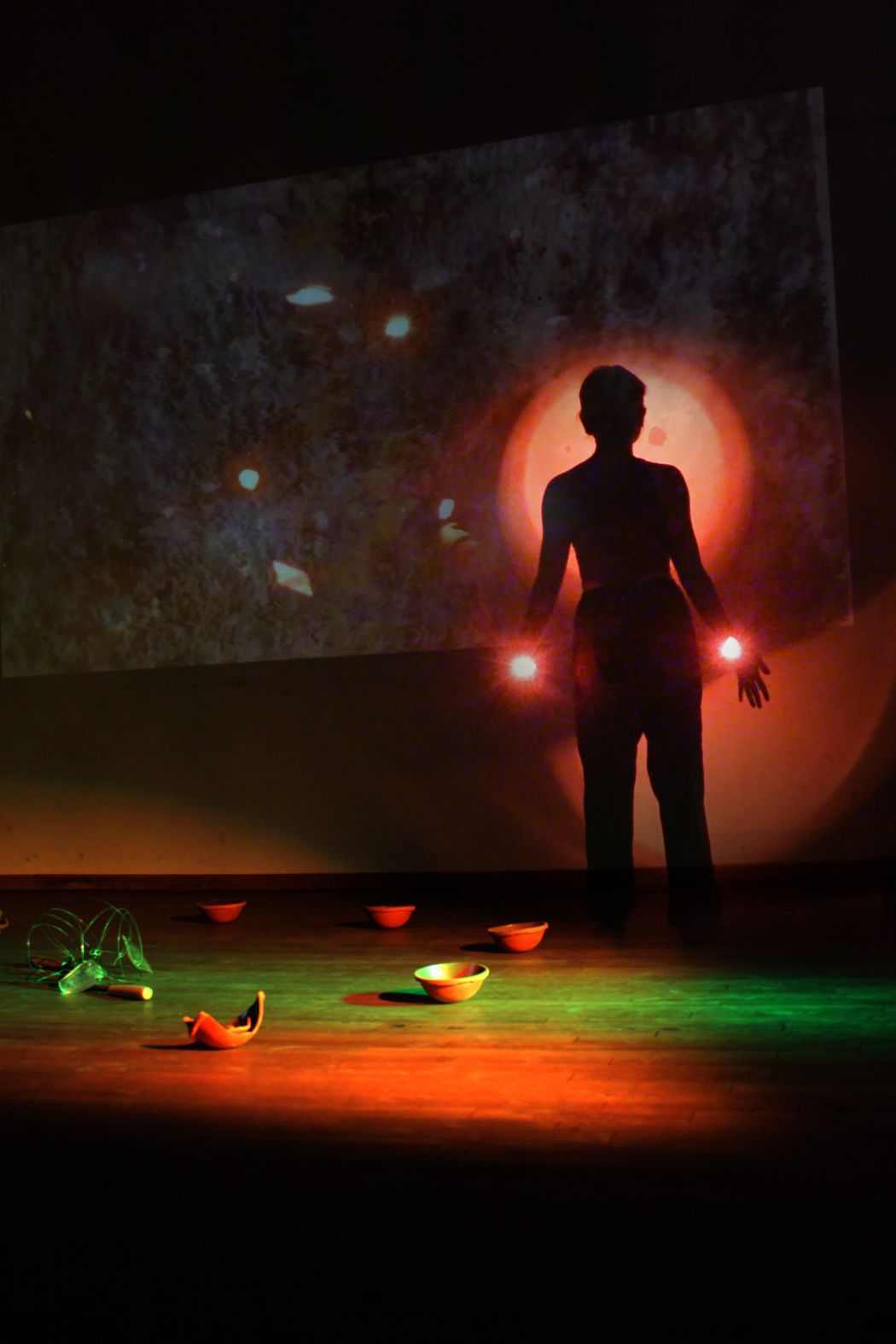
Marque-Lin is a Vietnamese-American multi-disciplinary performer, theater artist, poet and community organizer from California and New York. They have
a BFA in Acting, German, and Sociology from NYU: Tisch & a MA in Comparative Dramaturgy from Goethe Universität. They were a Humanity in Action Berlin
fellow and a Goethe Goes Global Fellow. They are the co-founder of the non-profit, United Networks (gUG) which works in 6 different regions in Germany in providing networking events, workshops, education and opportunities to address racist, inequitable practices in the cultural-political landscape and create systemic, legislative change.
22h30 • A musical rendering of King Nakeli/Nakelli/Nakeri Nw'embe‘s resistance • Megouem • Video / Chant / Lecture • DE / Berlin
Si l'on fouille suffisamment longtemps dans les archives (coloniales), on finit par découvrir des histoires enfouies d'autonomie et de rébellion. Le colonialisme qui a frappé le sol africain tout au long des XIXe et XXe siècles n'était rien d'autre qu'une guerre. Des décennies de guerre asymétrique menée avec acharnement, mais toute tragédie a besoin de figures héroïques. Et les documents d'archives peuvent nous les faire découvrir, mettant en lumière leur indomptabilité.
Avec le roi Nakeli/Nakelli/Nakeri Nw'embeli des Ngolo, le spectacle vise à présenter au public contemporain une figure héroïque de la résistance coloniale. Il rend hommage à ce roi en transmettant des extraits de son destin à travers des arrangements musicaux.
Rummage long enough in (colonial) archives and you will come across buried histories of autonomy and defiance. The colonialism that struck African soil throughout the 19th and 20th centuries was nothing other than war. Multiple decades of bitterly waged asymmetric war, but every tragedy needs heroic figures. And archive material may introduce us to them, illuminating their indomitability.
With King Nakeli/Nakelli/Nakeri Nw'embeli of the Ngolo, the performance aims to introduce a heroic figure of colonial resistance to a contemporary audience. Commemorating him by transmitting excerpts from his fate through musical settings.
Avec le roi Nakeli/Nakelli/Nakeri Nw'embeli des Ngolo, le spectacle vise à présenter au public contemporain une figure héroïque de la résistance coloniale. Il rend hommage à ce roi en transmettant des extraits de son destin à travers des arrangements musicaux.
Rummage long enough in (colonial) archives and you will come across buried histories of autonomy and defiance. The colonialism that struck African soil throughout the 19th and 20th centuries was nothing other than war. Multiple decades of bitterly waged asymmetric war, but every tragedy needs heroic figures. And archive material may introduce us to them, illuminating their indomitability.
With King Nakeli/Nakelli/Nakeri Nw'embeli of the Ngolo, the performance aims to introduce a heroic figure of colonial resistance to a contemporary audience. Commemorating him by transmitting excerpts from his fate through musical settings.

megouem chante, lit, écrit et se produit sur scène. Les poèmes, les textes et les chansons qui prennent vie et se concrétisent en mélodies et en chants sont autant d’impulsions, d’observations et de réflexions. Parfois, des idées éclairantes trouvent également leur place dans ces manifestations musicales. Inspirée par l’héritage spirituel de sa grand-mère, la préservation, la transmission et la médiation du savoir sont au cœur de la pratique artistique de megouem.
megouem is an independent vocal performer, writer and artistic-researcher who has opened for Dillon‘s one-stop concert in Berlin in March and has recently premiered performance pieces at Berliner Festspiele and at silent green’s Kuppelhalle.
megouem sings, reads, writes, and performs. the poems, pieces, and songs manifesting and given form in melodies and chants are impulses, observations, and reflections. Occasionally, illuminating insights also find their way into the musical manifestations. inspired by her Grandmother's spiritual legacy, the preservation, transmission and mediation of knowledge are central to megouem's artistic practice.
//www.instagram.com/megouem/ text ‍: Instagram
23h15 • KIMA • Huguette Tolinga, Philipp Kuhn • Percussion / Video • RDC, DE / Strasbourg
« KIMA » signifie « fuite » en lingala. La performance montre des images de personnes et de bateaux sur le fleuve Congo, naviguant entre les villes de Boende et de Kinshasa.
« KIMA » means « fleeing » in Lingala. The performance features images of people and boats on the Congo River, traveling between the cities of Boende and Kinshasa
« KIMA » means « fleeing » in Lingala. The performance features images of people and boats on the Congo River, traveling between the cities of Boende and Kinshasa
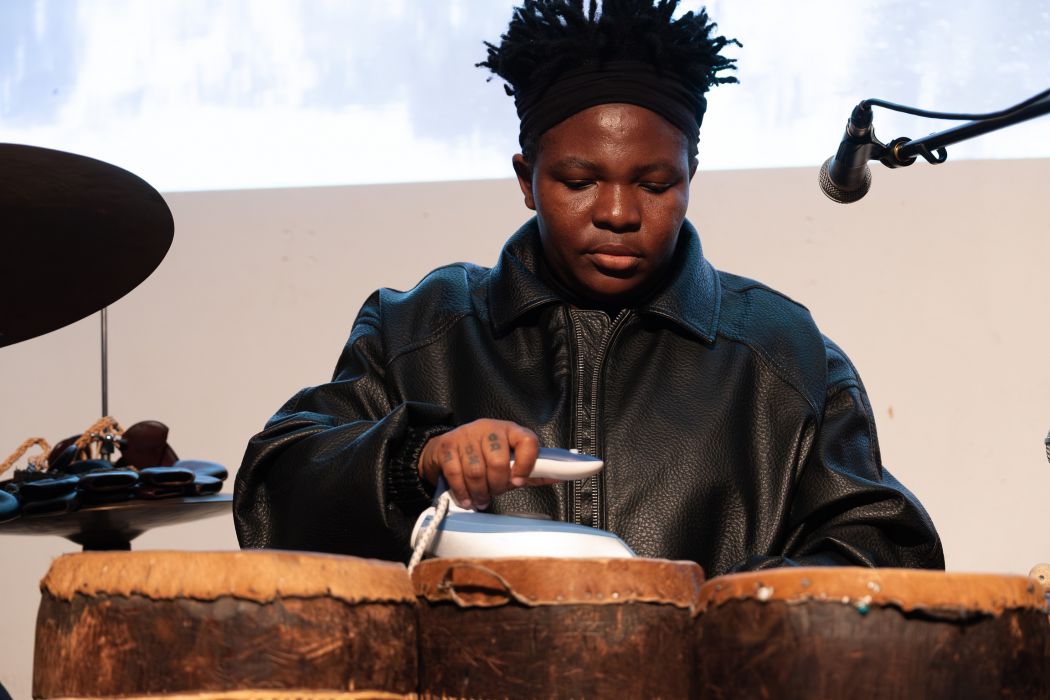
Huguette Tolinga is a self-taught singer-songwriter, percussionist, multi-instrumentalist, and singer, as well as the founder and artistic director of Hugembo Studio. She currently lives in Überlingen. Born in Boende, she began her career as a percussionist in Kinshasa with a contemporary dance company, the Compagnie Jacques Banayanga. In 2009, she founded her own group, Huguembo, with which she performs regularly in the Congo. Huguette frequently collaborates with theater and dance. In 2018, she joined the team of Not Another Diva… a musical creation by South African Hlengiwe Lushaba and Faustin Linyekula.